
As a sexpert, I’m often asked if there is a difference between lubes. What makes one higher quality? Which one is my personal fav? The answer to whether an expensive lube is any better than using something from your kitchen or pantry is ‘Yes, oh god, oh god, yes.’
Welcome to Lube 101: The Slippery Truth
Lubricants are an absolute must-have for many of us, but if you’re finding yourself staring cluelessly at the huge selection at Femplay, please know that there are differences. The type of lube you should choose will depend on your activity—sex, dildos, vibrators, etc.—and your body.
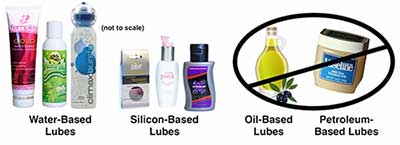
Water-Based Lubes: KY, Astroglide, Femplay Gold, etc.
Water-based lubricants are ‘the people’s lube’, as they are the most common and usually the cheapest. They’re always a good bet, because they work with toys and they are the best lubes to use with condoms. Water-based lubes are also popular because when they eventually dry out, they can be revamped with a little water (or spit).
There are two types of water-based lubricants: glycerin and non-glycerin. Non-glycerin varieties are better if you’re prone to yeast infections, and they aren’t as sticky as glycerin-based lubes. Water-based lubes are safe for sex toys like fleshlights, dildos and vibrators.
Silicone-Based Lubes: Pink, Pjur, Wet Platinum, etc.
Silicone lubricants last the longest, which makes them popular with the sex toy crowd, although they can be safely used with condoms as well. They are also hypoallergenic, good for massages before or after intercourse and can be used in water! Their major drawbacks are that they shouldn’t be used for oral sex play, they shouldn’t be used with certain types of silicone sex toys, and they are more expensive.
Oil-Based Lubricants: Baby Oil, Olive Oil, etc.
Oil-based lubricants are common ‘last minute’ lubes, as they can generally be found around the kitchen. These include vegetable oil, olive oils, peanut oils, etc. They are safe to ingest—obviously—however they may irritate some people.
Their major downsides are that they could damage the structural integrity of latex condoms and some latex or silicone sex toys. They also have a tendency to damage fabrics. So between ruining expensive sex toys like fleshlights and wrecking sheets, they are probably not worth the savings. Remember: never use an oil based lubricant with a condom.
Petroleum-Based Lubes: Vaseline, Mineral Oil, etc.
Petroleum lubricants simply shouldn’t be used, ever. Think about it: do you want to put a close cousin of your car fuel into your vagina? Petroleum-based lubes, including mineral oil and Vaseline, are not a good idea. They can ruin condoms, irritate the vagina and other sensitive parts, and stain fabric.
So, Which Lube to Choose?
When in doubt, just opt for a water-based lubricant. It is the most economical and can be found almost anywhere. It’s also safe for all types of condoms, dildos and vibrators, won’t stain fabrics and can be washed off with plain water.