
Rope tying is an art form and thanks to the Japanese they have  provided us with many different styles that have brought us to a more exciting and erotic world of rope bondage.
The Japanese call rope tying Shibari which is simply Japanese for ‘to tie’. This form of rope bondage has an interesting beginning as its history is from the Japanese military restraint technique of Hojojutsu, a form of martial arts which restrains a person.
There are many techniques and methods used in Hojojutsu and in the martial art practice it is rarely taught on its own and as such has been incorporated in parts to form a more erotic form of bondage rope tying like Shibari.
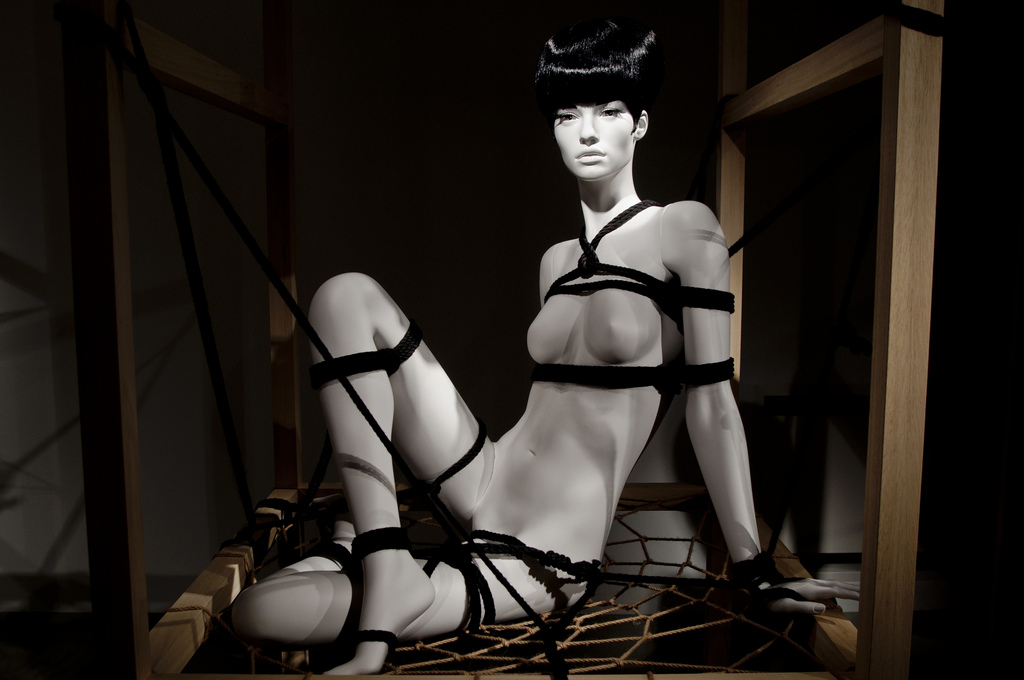 Shibari has transformed into a widely used form of rope tying, rope bondage or rope dress. It is more of an artistic form of erotica rope play. Rope tying and bondage is for restraint play, whilst rope dress also known as bondage web and Karada is more a technique to tie intricate patterns of rope around the body, usually in a very complex pattern.
Bondage rope is available in many different materials and the most popular materials used are of a nylon, cotton, hemp and jute material. It is ideal to use a comfortable and non-irritating rope to 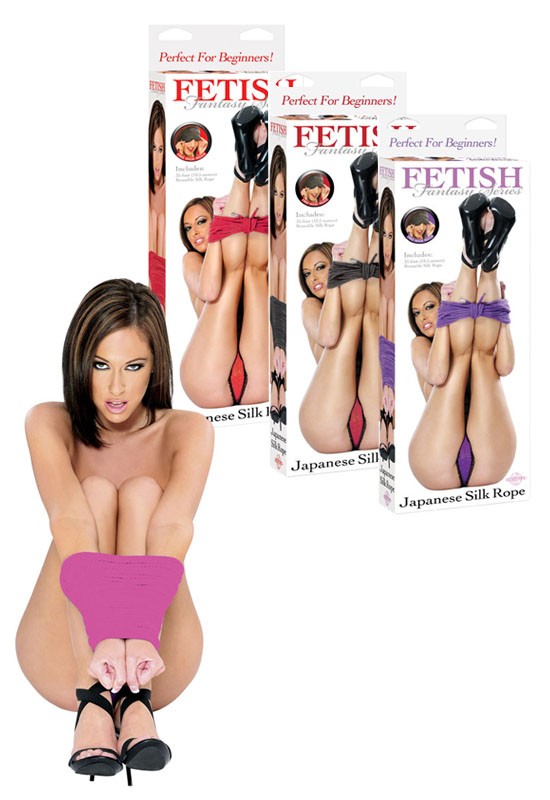 optimise your pleasure. Nylon is quite a comfortable material to use and has been known to be one of the safest. Rope sizes do vary from 3, 5 and 10 meters in length and the width vary depending on the materials used.
When you are starting out, one of the first things that you need to learn is how to tie a knot. Without knots it’s simply rope and not really something that has the bondage factor all over it.
The most commonly known rope bondage styles are breasts, spread eagle tie, frog tie, G-String tie, suspension and of course the ever popular hogtie bondage. You will find these as well as a few other helpful and interesting bondage ties. (Acknowledgment to ‘The Duchy’)

Start simple and work your way up to the more advanced knot and rope tying techniques. The ideal first knot that you should know is the Square Knot, which is also known as the Reef Knot. This knot is particularly good to tie two ropes together as it quite a flat knot and it applies less pressure on the skin and nerves than others.
The French Bowline is very similar to the Fisherman’s Lop as it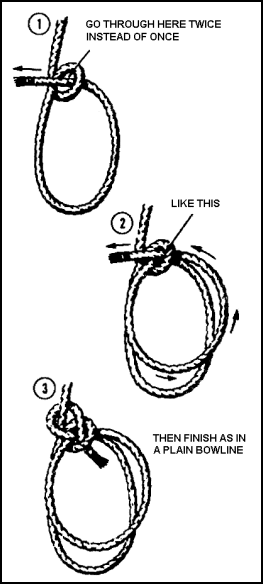 creates a loop that will not slip and it will not tighten or become loose under pressure. This is ideal for ankle or wrist restraints, and a very safe option as well. You can make as many loops as you like, especially if you would like the restraints to be wide which makes it feel a lot more comfortable.
Suspension bondage is definitely not for the beginner. You have to have experience with rope and knot tying. A simple incorrect knot can have the submissive crashing down to the ground causing injury. You will need to take your time to learn suspension bondage and please be very careful when practising it. When done right it can be extremely invigorating.
Specially designed restraint devices are also available that do not require you to learn the ropes or the knots. They are designed for easy to use restraint play and to emphasis on comfort and ensuring that there are no tell-tale signs of what naughty adventures you have been experimenting with and enjoying.
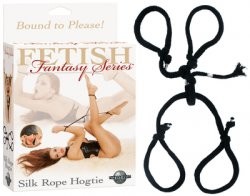
An example is the simple to use hogtie with all the knots and rope hoops in all the right places, it assists with getting into position a lot quicker. Ideal for anyone who doesn’t want to muck around with tying that perfect knot.

If the spread eagle position is more your style you can’t go past a bed restraint that is always ready to go as it’s attached to your bed. There are many different ready-to-go restraints from the soft and silky to the designer pleasing to the eye styles.
You can have a lot of enjoyment with bondage rope tying and restraint devices as it can be very liberating and also provides a trust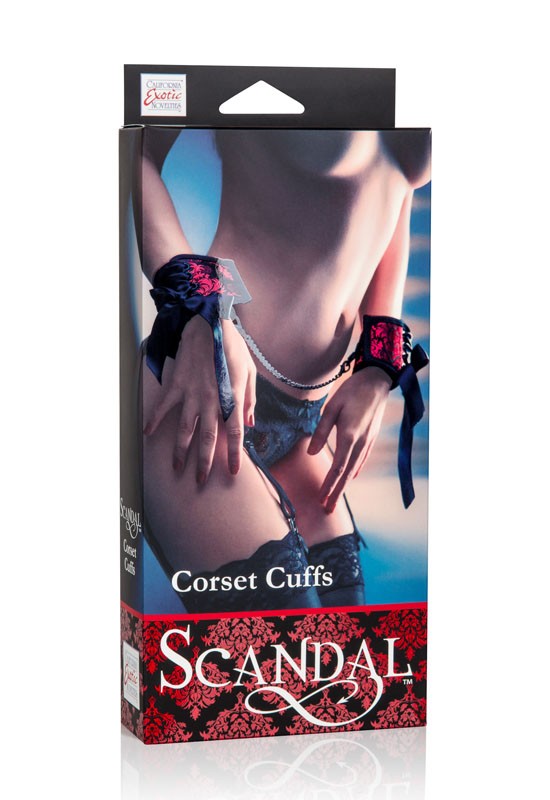 with your partner that you may not receive through other sexual activities. If you are restrained you are there for their pleasure, of course in the knowledge and hope that it’s also for your pleasure as well.
With all forms of bondage, whether it’s smacking, whipping or bondage tie it’s suggested to have a safe word. It could be a simple word like banana for when you are starting out. Then when you are more comfortable and more experienced you could change it up and make it a bit harder so that it adds a little more excitement to play time.
It is all personal preference for the levels of pain/pleasure that you would like to achieve. For the beginner, why not start soft and slow and work your way to be the more experienced who may like things a little rougher.
Take care, play safe and have fun!